Buying New Construction in Tradition? What to Check Before You Sign
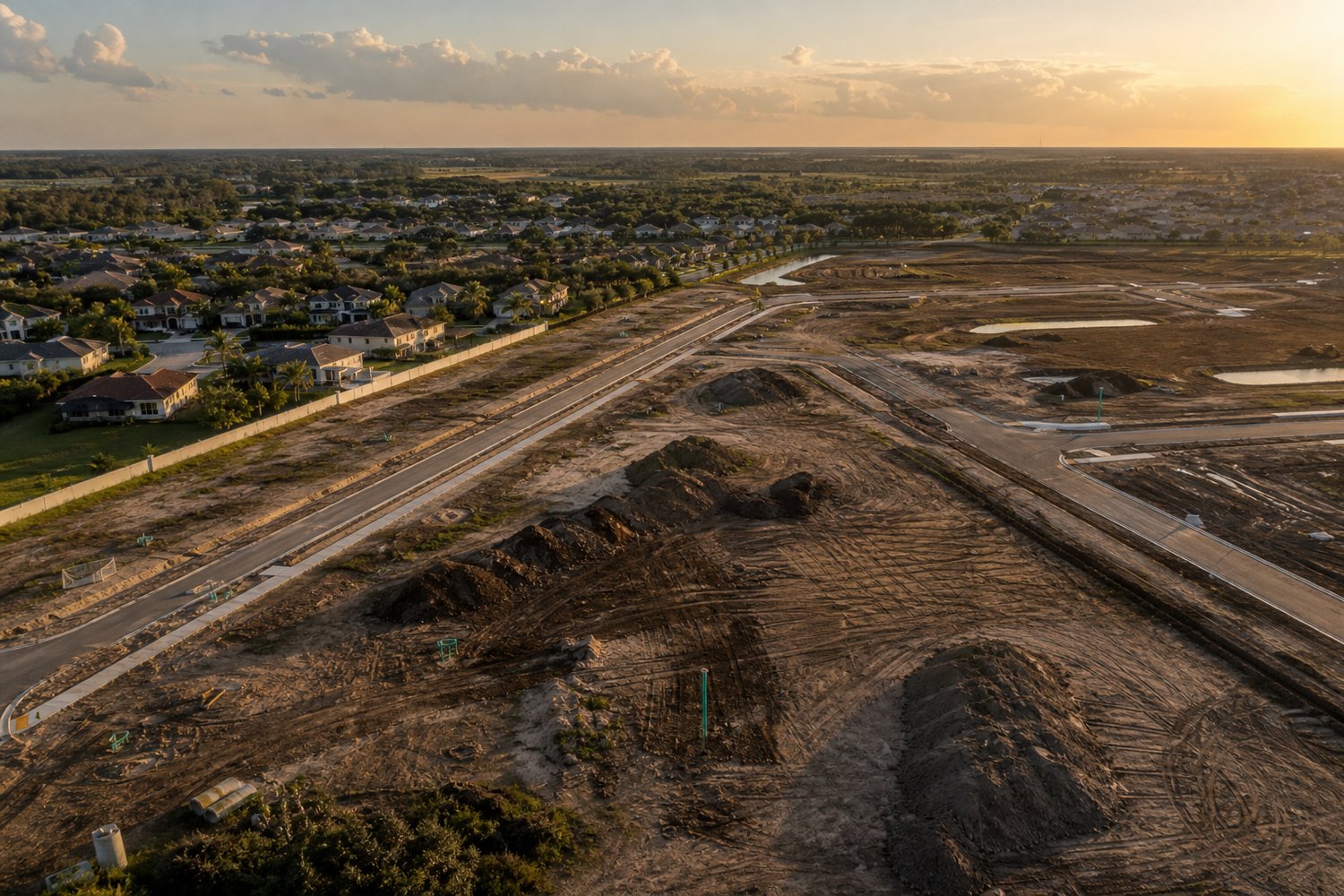
The advertised price of a new construction home in Tradition is only the starting point. Ask for the incentive terms in writing, a line-item price for the exact homesite, and the HOA and CDD figures for that parcel. Then compare the builder's offer against completed inventory and resale before you sign anything.
What Should You Check Before Buying New Construction in Tradition?
Before buying new construction in Tradition, get a written incentive sheet for the exact homesite, a line-item worksheet showing the lot premium and options, the HOA documents, the CDD assessment for that parcel, and a contract that spells out completion dates and inspection rights.
Then compare the builder's home against completed inventory and resale properties. The advertised price is rarely the real price. The right decision depends on the specific lot, contract terms, and financing.
Key Takeaways
-
Homes in Tradition had a median sale price of $410,000 over roughly the last 90 days, based on recent local market data as of November 2026. This is an area-level figure. A new home's actual value depends on its lot, options, and incentive terms.
-
There are 192 homes for sale in Tradition, and 94 homes sold over approximately the last 90 days, giving buyers inventory to compare before committing to a home that has yet to be built.
-
HOA and CDD costs are two separate obligations. CDD assessments appear as two non-ad-valorem lines on the St. Lucie County tax bill: operation and maintenance, and bond debt service.
-
A resale home inside a Community Development District can still carry a CDD assessment. Buying resale does not automatically eliminate this expense.
-
An advertised incentive only counts when you have its eligibility rules, required lender or title company, and deadlines in writing for your specific homesite.
I made this move myself. I sold a longtime family home and bought new construction in a gated community here in Port St. Lucie. I know how good a model home can look and how easy it is to overlook the paperwork.
Here is the checklist I'd want you to have before signing. If you'd like a deeper look at the community itself first, my guide to Tradition in Port St. Lucie covers the lay of the land.
What Should I Check on Price, Incentives, and the Lot Itself?
Check the real homesite price, not just the advertised base price. Ask for a line-item worksheet showing the base floor plan, structural options, design selections, lot premium, elevation charge, and community fees. You want to know exactly what you are paying for.
Get the Incentive in Writing for the Exact Home
An incentive in a banner ad is not necessarily an incentive in your contract. Ask the sales team for a written incentive sheet tied to the specific homesite.
It should identify:
-
The purchase-price credit, if any
-
Any financing subsidy or interest-rate buydown
-
Design-center or upgrade credits
-
Closing-cost contributions
-
Any required lender or title company
-
Minimum loan terms, if applicable
-
The contract deadline and closing deadline
-
Whether the incentive can be combined with other offers
This matters because the benefit is not always what it appears to be.
A financing subsidy can lower your starting monthly payment without reducing the purchase price. An upgrade credit is not the same as a price reduction. A requirement to use a preferred lender or title company can also limit your flexibility.
Since I am also a licensed Florida mortgage broker, I often compare the builder's preferred-lender offer with an outside loan quote. That way, you can see which package is actually better.
It is also how we determine whether a closing-cost credit is more valuable than a lower purchase price. The only way to know is to price both options.
Separate the Base Price From the Real Price
A low advertised base price may not be comparable to a completed inventory home or a resale property.
Other homes may already include landscaping, appliances, window treatments, or fencing that you would have to purchase separately with a new build.
Put everything on one page, line by line, before deciding which home is actually less expensive.
Check the Lot, Not the Model Home
The model home rarely sits on the exact lot you are considering. Before paying a lot premium, verify:
-
Rear and side setbacks
-
Drainage and stormwater features
-
Whether the lot backs up to a preserve or lake
-
Where utility equipment is located
-
Lot orientation and flood-zone information
-
Which surrounding phases are still under construction
-
Whether future roads or homesites could change your privacy or view
Then ask what the lot premium actually pays for. If the explanation is vague, slow down and get more information before committing.
How Do HOA and CDD Costs Change What a Tradition New Build Is Really Worth?
HOA and CDD costs affect your true monthly cost of ownership, and those obligations remain relevant after the builder is gone.
The HOA and CDD are separate obligations with different rules. Verify both for your exact parcel and development phase.
Treat the HOA and CDD as Two Different Obligations
The HOA is a private community association with its own governing documents, budget, rules, and collection process.
The CDD, or Community Development District, is a public special-purpose district.
According to Tradition Community Development District 11, property owners in the district pay annual assessments with separate operation-and-maintenance and bond-debt-service components.
These appear as two non-ad-valorem lines on the St. Lucie County property tax bill. The district's fiscal year runs from October 1 through September 30.
The amount depends on the parcel and the district's adopted budget, so I won't quote one community-wide number.
Instead, ask for:
-
The district number
-
The assessment for the relevant fiscal year
-
The operation-and-maintenance amount
-
The bond-debt-service amount
-
Confirmation of whether your parcel falls into a different assessment category from nearby homes
Always identify the fiscal year rather than asking only for the "current" amount.
Read the HOA Documents Before Any Review Window Closes
Request the declaration, articles, bylaws, rules, current budget, and schedule of recurring and one-time charges.
Pay attention to:
-
Architectural-control rules
-
Fencing and landscaping requirements
-
Parking restrictions
-
Rental rules
-
Pet policies
-
Amenity access
-
Whether the builder still holds development or voting rights
A low monthly HOA number means very little until you understand the budget and reserves behind it. Read the financials before falling in love with the brochure.
Also, know when your contract's review or cancellation window ends, and use that time to review the documents.
Do Not Assume Resale Gets You Out of the CDD
This is a common misunderstanding.
A resale home inside a Community Development District can remain subject to district assessments. The charge is not limited to the first buyer or to new construction.
Whether you are considering a builder home or a resale property, pull the tax bill for that specific parcel and compare the numbers like for like.
How Do Inspections and Construction Timelines Protect a New-Construction Buyer?
Inspections and construction timelines are two of your best tools for catching problems early.
Hire an independent inspector at more than one stage, and treat any completion date as a forecast unless the contract defines an actual obligation.
Inspect at Three Stages
A new home is not automatically a perfect home. It is built by multiple trades working on a schedule.
A practical inspection sequence includes:
-
Pre-drywall inspection: While framing, wiring, and plumbing are still visible.
-
Final inspection before closing: To identify items that need to be added to the punch list.
-
Warranty or punch-list inspection after move-in: To identify issues that may need attention after you take possession.
Confirm in writing that independent inspectors may attend and that their findings do not waive your warranty rights or change the closing provisions.
If the builder pushes back on independent inspections, pay attention and review the contract carefully.
Pin Down the Construction Timeline
For a home that has not yet been built, ask for the following details in writing:
-
Expected construction start
-
Estimated substantial completion date
-
Certificate-of-occupancy target
-
Closing notice period
-
Permitted delay or extension rights
-
Change-order deadlines
-
The remedy if the home is late
If your current home is already under contract or you are arranging an interest-rate lock, a missed completion date can affect everything.
Selling and buying at the same time is absolutely doable, but it works best when the contract timeline matches the timeline in your plans.
The builder's closing is typically handled through a title company, so ask early whether you are required to use a specific one.
Should I Buy From the Builder, Buy Completed Inventory, or Buy a Resale in Tradition?
Compare all three options using the same criteria before deciding.
Buying new construction in Tradition is really a comparison exercise. Each path comes with different considerations involving delivery risk, customization, warranty coverage, lot premiums, included features, and the amount of competing builder inventory nearby.
What the Local Numbers Say
Over roughly the last 90 days, the median sale price for homes in Tradition was $410,000, according to recent local market data.
Here is how nearby areas compare. These are area-level median sale prices. An individual home's value depends on its condition, street, build year, and timing.
| Area | Median Sale Price |
|---|---|
| Tradition | $410,000 |
| Port St. Lucie | $395,000 |
| Stuart | $397,000 |
| Palm City | $635,000 |
| Jensen Beach | $475,000 |
| Fort Pierce | $299,000 |
Source: Aggregated public listing data, trailing 90 days, as of November 2026.
Use these figures as background only. Your decision comes down to the specific home in front of you and how it compares with alternatives in the same area and property type.
With 192 homes for sale in Tradition, including 65 new listings in the last 30 days, you have options to measure the builder's offer against.
How the Three Purchase Paths Differ
| Purchase Type | Main Question to Answer | What to Ask For |
|---|---|---|
| To-be-built home | What happens if completion is delayed? | Milestone schedule, delay and extension rights, change-order deadlines |
| Completed or nearly completed builder inventory | Is the incentive better than a price reduction? | Written incentive sheet, line-item price, warranty terms |
| Resale in Tradition or nearby 34987 | What do the CDD and HOA obligations look like for this parcel? | Tax bill, HOA budget, age and condition of major systems |
Make the Comparison Apples to Apples
For every option, put the same items side by side:
-
Total purchase price, including lot premium and upgrades
-
Age and condition of the home, including immediate repair needs
-
HOA and CDD obligations for that specific parcel
-
Property-tax basis and insurance availability
-
Estimated completion or move-in date
-
Seller or builder concessions
-
Risk of ongoing construction nearby
That last item is easy to overlook.
Ask how future phases or additional homesites near your lot could affect traffic, amenities, privacy, and resale appeal.
The builder's sales team can explain what is planned, but get anything important to your decision in writing.
If you are comparing several builders across the county, my overview of new construction opportunities in St. Lucie County and my guide to new construction homes in Port St. Lucie can help you frame the search.
You can also read my Google reviews to see how clients feel about working with me.
Frequently Asked Questions About Buying New Construction in Tradition
Does a Resale Home in Tradition Still Have a CDD Assessment?
It can. A resale home inside a Community Development District can remain subject to district assessments because the charge is not limited to the first buyer or to new construction.
Check the tax bill for the exact parcel and confirm the district's adopted budget for the relevant fiscal year.
Is a Builder's Closing-Cost Credit Better Than a Lower Purchase Price?
Not automatically.
A credit or financing subsidy can reduce what you pay upfront or lower your starting payment without reducing the purchase price. A price reduction works differently.
Get the incentive terms in writing, including any required lender or title company, and have the numbers calculated both ways before choosing.
Should I Hire an Independent Inspector for a New-Construction Home in Port St. Lucie?
Yes. An independent inspector is worth having when buying a new build.
A pre-drywall inspection, a final inspection before closing, and a post-move-in warranty inspection give you three opportunities to identify problems.
Confirm in writing that your inspector can attend and that inspection findings do not waive your warranty rights.
What Happens if My New-Construction Home Is Not Finished by the Contract Deadline?
It depends on what your contract says.
Treat an estimated completion date as a forecast unless the contract creates a defined obligation. Review the permitted delay and extension rights, closing notice period, and stated remedy before signing.
How Could Future Phases Near Tradition Affect My Home?
Additional homesites, roads, or amenities can change traffic, privacy, views, and resale appeal.
Ask the builder what is planned around your specific lot and which phases are still under construction. Put anything that matters to your decision in writing.
Ready to Compare Your Options?
The best purchase in Tradition is the one that still makes sense after you account for the lot premium, HOA and CDD costs, incentive conditions, and construction timeline.
I can help you compare a builder offer, completed inventory, and resale properties side by side, with both the real estate and financing details in view.
Your next chapter starts with your home's value. Let's find out!
Connect with Mel and see what's possible!
About Melissa Carbonell
Melissa Carbonell is a Treasure Coast REALTOR® and licensed Florida mortgage broker with over 25 years of combined experience in real estate sales and mortgage lending. She has been a licensed Florida real estate agent since 2012.
She leads the Melissa Carbonell Group, also known as Modern Midlife Melissa, brokered by Real Broker, LLC, serving buyers, sellers, and relocating homeowners across Port St. Lucie, Tradition, Stuart, Palm City, and the Treasure Coast.
Her career production exceeds $100 million, and she recently sold her longtime family home and moved into a new-construction home in a gated Port St. Lucie community.
Real Broker, LLC | (954) 817-2604
Equal Housing Opportunity. Melissa Carbonell, Broker Associate, Real Broker, LLC; also a licensed Florida mortgage broker. Regulated by the Florida Real Estate Commission (FREC).
This article is general information, not legal, tax, or financial advice. Confirm your own numbers with your title company, tax advisor, or lender.
Categories
Recent Posts