South Florida Condo Insurance Crisis: What Buyers Need to Know in 2026
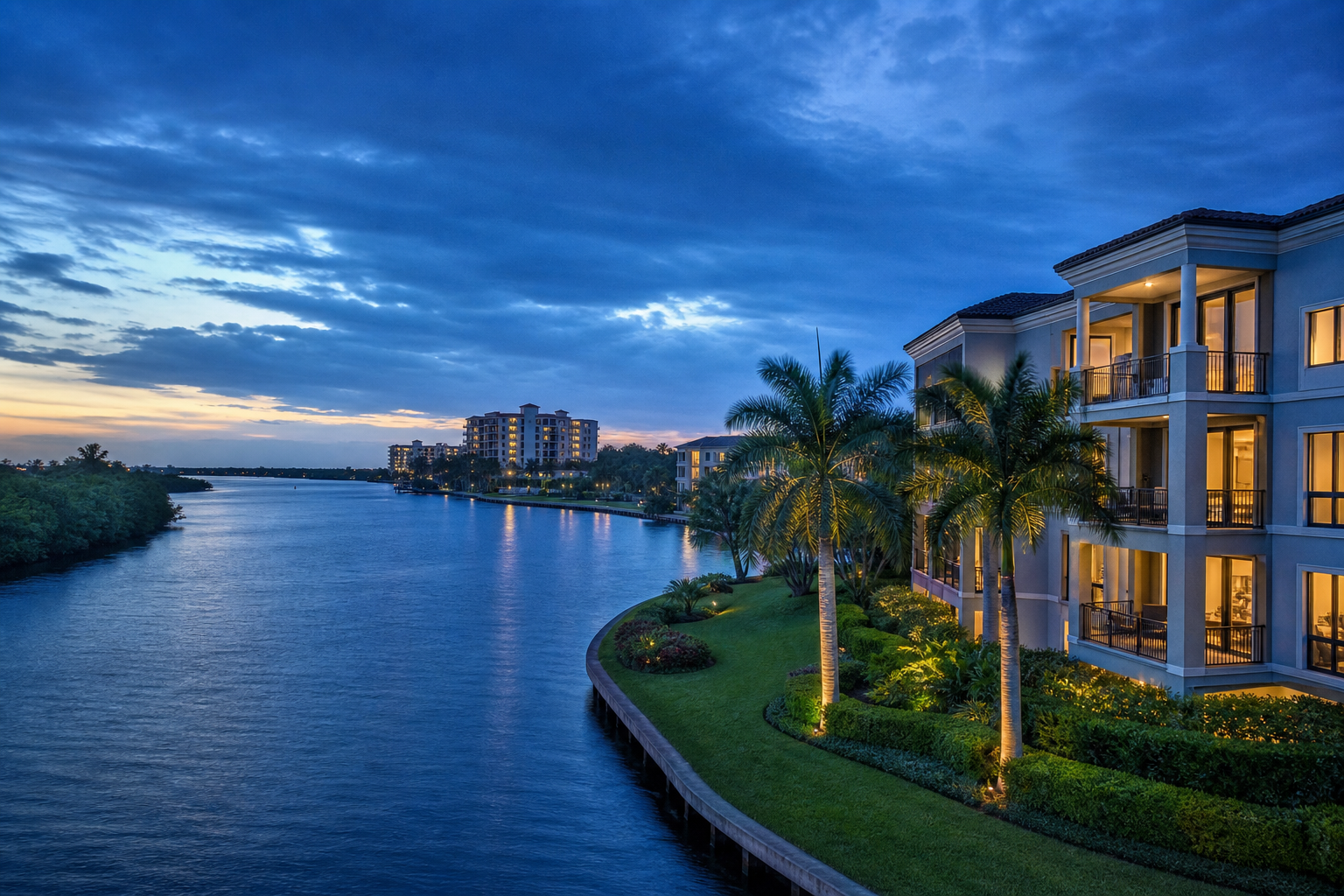
South Florida condo buyers face sharply elevated HO-6 premiums and rising association master policy costs, with Broward County averaging around $1,816 per year including wind coverage. The market has shown modest stabilization in 2026, but premiums remain high and insurance-driven special assessments are reshaping what condos are worth and how fast they sell.
By Melissa Carbonell | August 2026
What Is the Condo Insurance Crisis in South Florida and How Does It Affect Buyers in 2026?
South Florida condo buyers are navigating a market where insurance costs, not just purchase price, determine whether a unit is truly affordable.
As of 2026, Broward County's average HO-6, or unit-owner, premium including wind coverage sits at roughly $1,816 per year, according to Florida Condo Insurance Statistics 2026, which summarizes data from the Florida Office of Insurance Regulation.
That figure nearly doubled from 2022 to 2023 before easing slightly.
Meanwhile, the condo association's master policy, which covers the building's exterior and common areas, has followed a similar arc.
The result is a two-layer cost problem that every buyer needs to understand before making an offer.
Two Policies, One Very Real Impact on Your Monthly Payment
Your HO-6 Policy vs. the Association's Master Policy
Here's the thing most buyers don't realize until they're already in contract: you're paying for two separate insurance programs when you buy a condo in Florida.
Your HO-6 policy covers your interior finishes, flooring, cabinetry, personal property, and loss of use if a storm or plumbing event makes your unit uninhabitable.
The association's master policy covers the building shell, roof, common areas, and exterior elements.
As OceanPoint Claims, a Treasure Coast public adjuster, explains, disputes after hurricanes frequently arise because unit owners assume the master policy will cover interior damage.
It typically won't.
That gap is exactly why your HO-6 coverage matters, and why the deductible structure on both policies needs to be on your radar before you close.
What the Numbers Actually Look Like in 2026
The spread between Fort Lauderdale and Port St. Lucie is significant.
A July 2026 rate study by Insurance.com puts the average HO-6 premium in Fort Lauderdale at about $1,110 per year, or roughly $93 per month, for a standard coverage package of $40,000 personal property, $100,000 liability, and a $1,000 deductible.
That same study found enormous carrier variance, from the low $300s to over $2,700 annually for similar coverage, depending on building age, construction type, and insurer appetite.
By contrast, the same methodology applied to Port St. Lucie shows an average HO-6 premium of about $679 per year, according to a companion Insurance.com study for Port St. Lucie.
That's a meaningful difference, and it reflects the reality that inland Treasure Coast communities carry less wind exposure than coastal Broward high-rises.
For regulatory context, the most recent FLOIR county-level data, from Q1 2026, shows Broward's average HO-6 premium including wind at $1,816, while the statewide average across roughly 927,000 policies runs about $1,774 per year, per Florida Condo Insurance Statistics 2026.
These are regulatory averages, not quotes, but they give you a useful baseline for what a building with average risk looks like.
Is the Crisis Getting Better or Worse?
The honest answer is: better than 2023, but still elevated.
A May 2026 market update reported by Insurance Journal showed that Florida-domiciled personal property insurers posted nearly $1 billion in underwriting gains, and condo association premiums had seen three consecutive quarters of declines totaling about 5.3%.
That's real stabilization after years of brutal increases.
For historical context, Broward HO-6 premiums including wind climbed from roughly $1,472 in Q1 2022 to $1,847 in 2023, then eased to $1,816 by Q1 2026, according to the 2026 FLOIR data summary.
On the Treasure Coast, St. Lucie County's FLOIR data for March 2024 through March 2025 showed condo unit-owner premiums moving from about $1,538 to $1,542, a near-flat trend, while single-family homeowners premiums in the same county rose about 4.24% over the same period.
The peak of the crisis, when many owners were forced into surplus-lines carriers, saw HO-6 premiums in that segment average about $2,382, with year-over-year increases of around 32%, according to a March 2025 report by Insurance Journal on Florida's E&S market.
The federal government has also flagged Florida as the center of national trends toward tightened underwriting and higher condo coverage costs, per the U.S. Treasury Federal Insurance Office 2025 Annual Report.
The bottom line for buyers in 2026: premiums are stabilizing, but at a level that's roughly 20% to 25% higher than they were four years ago.
That matters for your budget and for the resale value of any unit you buy.
How Insurance Costs Are Moving the Market Right Now
What It Means for Days on Market and Price Negotiation
I walk my clients through this every time we look at a condo together.
Buildings with a history of insurance-driven special assessments, large master policy premium spikes, or thin reserves are sitting longer and seeing more price negotiation than comparable buildings with stable financials.
That's not a theory.
It's what's happening across Broward and the Treasure Coast right now.
Buyers are asking for association insurance summaries, reserve studies, and special assessment histories before they make offers.
If a seller can't produce those documents quickly, or if what they show is unfavorable, it shows up in the offer price and the timeline.
For context on how market conditions vary across the region, here's a snapshot of recent activity:
| Area | Median Sale Price | Median Days on Market |
|---|---|---|
| Port St. Lucie | $399,900 | 13 |
| Tradition | $465,000 | 50 |
| Stuart | $435,381 | 25 |
| Palm City | $672,900 | 48 |
| Jensen Beach | $475,000 | 50 |
| Fort Pierce | $289,990 | 27 |
| Deerfield Beach | $286,600 | 23 |
Source: Zillow sales data, trailing approximately 90 days, as of August 2026. Area-level medians only. Individual property values vary by condition, street, and build year.
The longer days on market in places like Tradition, Jensen Beach, and Palm City reflect the broader dynamic: buyers are doing more due diligence, and buildings with insurance complexity are part of that story.
A low HOA fee today doesn't tell you much if the reserve fund is underfunded and a special assessment is coming.
I tell every buyer I work with to read the financials before they fall in love with the listing photos.
Coastal vs. Inland: The Insurance Geography Matters
For buyers comparing Fort Lauderdale condos to Treasure Coast options, the geography of insurance risk is real.
Coastal and riverfront condos in Martin County, including Stuart, or barrier-island communities in Indian River County typically face higher master policy rates per $100 of insured value than inland garden-style communities in Port St. Lucie.
According to Atesa Risk Advisors' 2026 Florida condo association insurance cost guide, typical Florida ranges run from $0.25 to over $1.00 per $100 of insured value, with coastal Martin and Indian River often at the higher end of that band.
That differential flows directly into HOA dues.
When the association's master policy renews at a higher rate, the budget has to absorb it somewhere, and that somewhere is usually monthly dues or a special assessment.
Your specific number depends on the building's age, construction type, location, and claims history.
That's exactly the kind of analysis I run with my clients before we even make an offer.
What to Review Before You Buy: The Insurance Due Diligence Checklist
Documents to Request During Your Contract Review Period
Under Florida Statute 718.503, sellers of condo units are required to provide buyers with specific association documents before closing.
For non-developer sellers, failure to deliver these disclosures makes the contract voidable by the buyer before closing.
In practice, your agent and the title company coordinate delivery of these materials during the association document review period.
Here's what I tell every buyer to focus on:
Master Policy Declarations Page
Look at the total insured value, the carrier, the deductibles, especially the wind or hurricane deductible, which is often expressed as a percentage of the building's insured value, and the renewal date.
Wind and Hurricane Coverage Confirmation
Verify that the master policy includes wind coverage, and understand what the deductible means in dollar terms for the building.
Flood Policy Status
If the building is in a FEMA flood zone, confirm whether the association carries a flood policy and what it covers versus what your HO-6 would need to cover.
Association Budget and Insurance Line Items
Look at what the association is currently paying for the master policy and whether that line item has been increasing.
Also check the reserve fund balance and whether the reserves are funded to the level required under Florida's updated reserve requirements.
Special Assessment History
Ask specifically whether any assessments in the last three to five years were triggered by insurance premium increases, storm damage, or structural remediation.
This is a pattern, not a one-time event, in many older Broward buildings.
Ongoing Litigation
Sellers in Florida are expected to disclose known litigation involving the association, including disputes with insurers or contractors after a storm claim.
Closing Costs and the Insurance Picture Together
When you're evaluating a condo purchase, insurance costs touch the transaction in two places: your ongoing monthly costs, including the HO-6 premium plus your share of the master policy through HOA dues, and the closing itself.
Florida condo deed transfers are subject to documentary stamp tax under Chapter 201, Florida Statutes, with the statutory rate at $0.70 per $100 of consideration for all Florida counties except Miami-Dade.
Under Florida DOR guidance, all parties to the deed are legally liable for the tax, but who actually pays it is a matter of contract negotiation, not statute.
In parts of Broward, it's common for the seller to pay doc stamps on the deed, but that's a custom, not a rule.
On the Treasure Coast, practices vary by sub-market.
The same goes for title insurance premiums, HOA estoppel fees, and prepaid assessments.
Every one of these is negotiable as part of the offer.
The only way to know what's customary in the specific building and market you're targeting is to work with someone who closes deals there regularly and can walk you through what the numbers actually look like for your situation.
Frequently Asked Questions
How Much Does Condo Insurance Cost in Fort Lauderdale Right Now, and Why Is It Higher Than Other Parts of Florida?
As of mid-2026, the average HO-6 premium in Fort Lauderdale runs about $1,110 per year for a standard coverage package, according to a July 2026 Insurance.com rate study, though individual quotes range from the low $300s to over $2,700 depending on the carrier and building.
Broward County's regulatory average including wind coverage is about $1,816 per year, per Q1 2026 FLOIR data.
Fort Lauderdale costs more than inland markets like Port St. Lucie because of its coastal wind exposure, older building stock, and the concentration of high-rise construction that's expensive to insure and repair.
What's the Difference Between My HO-6 Policy and the Condo Association's Master Policy?
Your HO-6 policy covers your unit's interior finishes, personal property, liability, and loss of use.
The association's master policy covers the building exterior, roof, and common areas.
Both policies affect your total monthly cost.
Your HO-6 premium is a direct out-of-pocket expense, and the master policy cost flows through your HOA dues.
When the master policy renews at a higher rate, your dues typically go up, or the association issues a special assessment.
Understanding both layers before you buy is essential, especially in older Broward buildings where master policy costs have been volatile.
Are Condo Insurance Premiums Coming Down in Broward and the Treasure Coast, or Are They Still Rising?
The market has stabilized meaningfully compared with 2022 and 2023.
A May 2026 Insurance Journal report showed condo association premiums had declined for three consecutive quarters, totaling about 5.3% in reductions.
However, premiums are still roughly 20% to 25% higher than they were in 2022, so "stabilizing" doesn't mean cheap.
In St. Lucie County, the most recent FLOIR trend data from March 2024 through March 2025 showed near-flat HO-6 premiums, which is better news than Broward's trajectory over the same period.
How Do Rising Condo Insurance Costs Affect What My Unit Is Worth and How Fast It Will Sell?
Buildings with insurance-driven special assessments, thin reserves, or large master policy increases are seeing longer days on market and more price negotiation than comparable buildings with stable financials.
Buyers are now routinely requesting association insurance summaries and reserve studies before making offers, and unfavorable results show up in offer prices.
A unit in a well-managed building with predictable insurance costs will hold its value better and sell faster than a similar unit in a building where the insurance picture is uncertain.
What Should I Look for in the Association's Budget and Insurance Documents Before Buying a Treasure Coast Condo?
Request the master policy declarations page, wind and hurricane deductible details, flood policy status if the building is in a FEMA flood zone, the association's current budget with insurance line items, the reserve fund balance, and any special assessment history from the past three to five years.
Under Florida Statute 718.503, sellers of condo units are required to provide these documents, and you typically have a multi-day review period under your contract during which you can cancel if what you find is unacceptable.
Don't skip this step, and don't rely on the seller's summary.
Read the actual documents.
The Condo Insurance Picture in South Florida in 2026
The condo insurance picture in South Florida in 2026 is better than it was two years ago, but it's still complex enough to cost you real money if you don't know what to look for.
Whether you're buying in Fort Lauderdale, Port St. Lucie, Stuart, or anywhere along the Treasure Coast, the insurance due diligence described above isn't optional.
It's the difference between a smart purchase and an expensive surprise.
I've been through this myself, as both an agent and a buyer who relocated from Fort Lauderdale to a new-construction community in Port St. Lucie.
I know what these documents say, I know what the red flags look like, and I can walk you through what it all means for your specific situation.
As both a licensed REALTOR® and a licensed Florida mortgage broker, I can also help you see how insurance costs interact with your financing picture from day one.
Your next chapter starts with your home's value. Let's find out!
Or, if you're ready to talk through a specific building or neighborhood, connect with me and see what's possible.
About Melissa Carbonell
Melissa Carbonell is a Fort Lauderdale area REALTOR® and licensed Florida mortgage broker with over 25 years of combined experience in real estate sales and mortgage lending.
She leads the Melissa Carbonell Group, also known as Modern Midlife Melissa, brokered by Real Broker, LLC, serving sellers, buyers, and relocating families across greater Fort Lauderdale, Broward County, and the Treasure Coast.
Her career production exceeds $100 million, she closes 12 to 25 transactions per year, and she ranks in the top 10% of Broward County agents by MLS production.
Widely regarded as a condominium transaction expert, Melissa has served as president of a condominium board, held HOA leadership roles in Victoria Park and greater Fort Lauderdale, and has educated hundreds of agents and consumers on Florida's evolving condo legislation through her YouTube channel.
She recently completed her own midlife move, selling her Fort Lauderdale family home and relocating to a new-construction gated community in Port St. Lucie, giving her firsthand experience with the exact transitions her clients navigate.
Legal Disclaimer: This article is general information only and does not constitute legal, tax, or financial advice. Readers should confirm their own costs, coverage details, and contract terms with their attorney, tax advisor, lender, or title/closing officer.
Categories
Recent Posts