Why Insurance Costs Are Pushing South Floridians to Relocate
Soaring homeowners insurance premiums in South Florida, often $5,000 to $15,000 or more annually, are becoming one of the biggest reasons midlife homeowners are selling and relocating.
For many homeowners, the question is no longer simply, "Can I afford my mortgage?"
It's: "Can I afford to keep living here?"
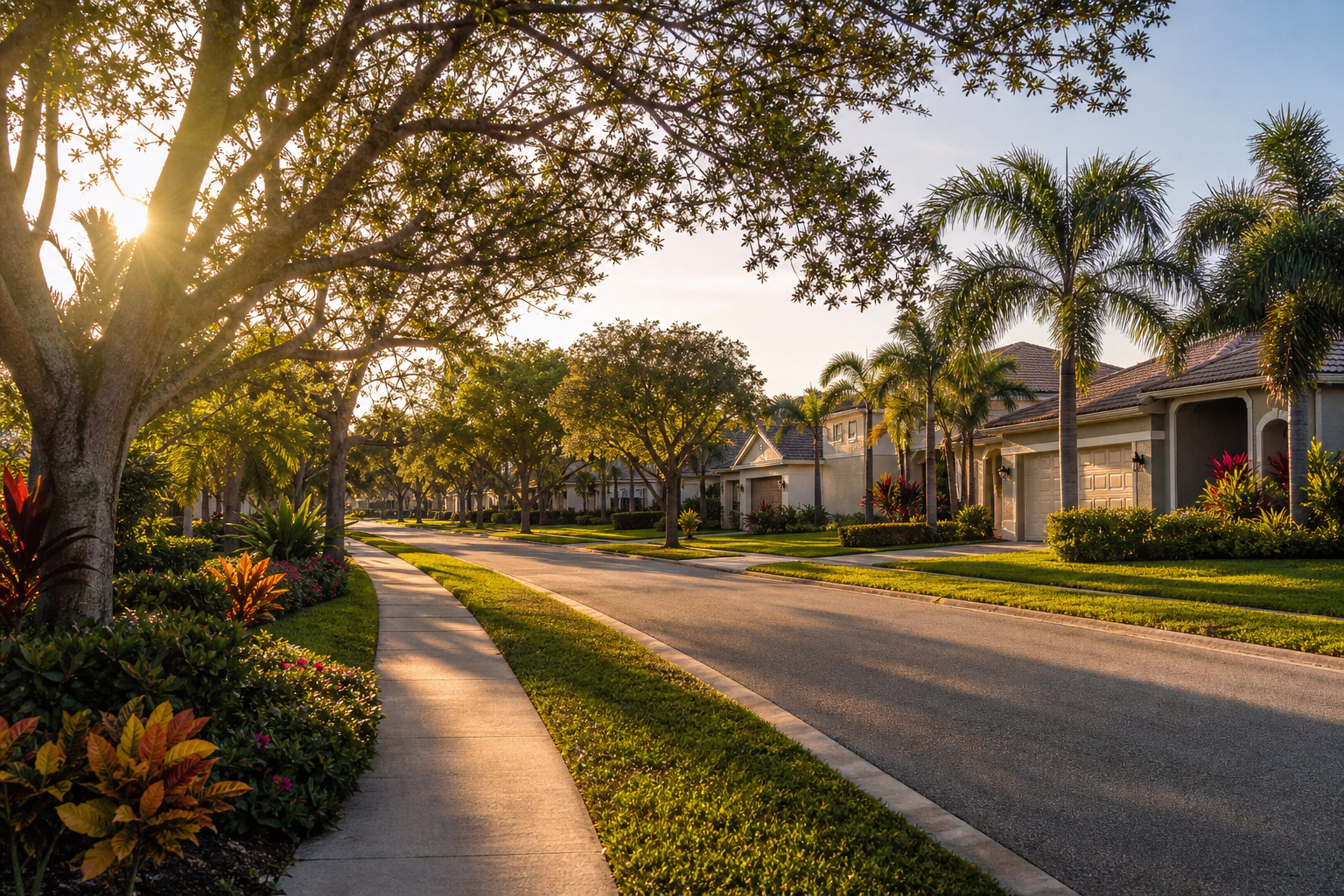
The Treasure Coast and Port St. Lucie offer lower-risk inland areas, newer construction, and potentially lower insurance costs that can make relocating financially compelling.
By Melissa Carbonell | August 2026
Why Are Homeowners Insurance Costs Pushing South Floridians to Relocate?
Homeowners insurance in South Florida has become one of the largest line items in a household budget.
Many Broward and Miami-Dade homeowners are now paying $5,000 to $15,000 or more per year, with some coastal properties running even higher.
When insurance alone consumes what used to be a mortgage payment, the math on staying starts to fall apart.
That financial pressure is driving many midlife homeowners to consider selling, unlocking their home equity, and relocating to lower-cost areas such as Port St. Lucie and the Treasure Coast.
How Bad Has the Insurance Crisis Actually Gotten in South Florida?
Let me be direct.
The insurance situation in South Florida is not a temporary blip.
It is a structural shift that has been building for years and accelerated sharply after the 2021 and 2022 hurricane seasons.
Several major insurance carriers exited the Florida market entirely, while those that remained repriced aggressively.
According to the Insurance Information Institute, Florida homeowners pay some of the highest average homeowners insurance premiums in the country.
The Florida Office of Insurance Regulation has also documented the instability that followed multiple insurers becoming insolvent, leaving tens of thousands of policyholders looking for coverage through Citizens Property Insurance Corporation, Florida's state-backed insurer of last resort.
Citizens has also been actively moving policyholders into private insurance through its depopulation program.
That means homeowners who believed they had stable coverage may suddenly receive notice that their policy is being transferred to another carrier, sometimes at a significantly higher rate.
The Florida Legislature has passed multiple reform packages intended to stabilize the insurance market, but the resulting premium relief has been slow and uneven, particularly in South Florida's highest-risk coastal areas.
Here's what I'm seeing with clients in Fort Lauderdale and Broward County:
Insurance renewals that once came in around $2,500 to $3,500 are now arriving at $7,000, $9,000, or more.
Some homeowners are receiving non-renewal notices.
Others are watching lender-required wind and flood coverage stack up into numbers that make the home genuinely difficult to afford, even when the mortgage itself is paid off.
The Flood Insurance Layer
Homeowners insurance is only part of the picture.
Many South Florida properties also require separate flood insurance through the National Flood Insurance Program (NFIP) or private flood carriers.
FEMA's Risk Rating 2.0 methodology, which went into full effect in 2022, recalculates flood insurance premiums based on a property's individual risk characteristics rather than simply its flood zone designation.
For many South Florida homeowners, that recalculation resulted in significant premium increases.
The methodology is designed to create more individualized flood-risk pricing, but for some homeowners, the financial impact has been substantial.
Then add:
- Wind mitigation requirements
- Roof maintenance
- Roof age requirements
- Hurricane shutters
- Impact-rated windows and doors
- Flood insurance
- Homeowners insurance
And you begin to see why the total cost of owning a home in South Florida has changed so dramatically.
What the Numbers Look Like: South Florida vs. Treasure Coast
| Cost Factor | South Florida, Broward/Miami-Dade | Treasure Coast / Port St. Lucie |
|---|---|---|
| Typical homeowners insurance range, non-coastal | $5,000 to $15,000+ annually | $2,500 to $6,000 annually, depending on build year and location |
| Flood insurance exposure | Higher exposure in many areas with rising premiums | Lower for many inland communities, with many newer homes in lower-risk zones |
| Roof age requirements | Strict, with many carriers requiring newer roofs | Same statewide standards, but new construction avoids many older-roof issues |
| New construction availability | More limited, with a large resale and condo market | Extensive new construction in Tradition, Wylder, Verano, and other communities |
| Citizens depopulation exposure | Higher concentration of policies being reassigned | Lower concentration in many newer inland communities |
Important: Insurance premiums vary significantly by property, carrier, wind mitigation rating, flood zone, roof age, coverage level, and other factors. These ranges are illustrative of the general market differential. Your actual costs will vary. Always confirm current quotes with a licensed Florida insurance agent.
Why the Treasure Coast Is Becoming the Practical Answer
I moved through this myself.
I sold my family home in Fort Lauderdale and relocated to a new-construction home in a gated community in Port St. Lucie.
One of the factors I considered, and the same analysis I walk my clients through, was the total cost of ownership.
Insurance was a significant part of that calculation.
Port St. Lucie and the broader Treasure Coast offer several structural advantages that can matter when you're looking at the numbers honestly.
New Construction Can Reset the Insurance Equation
A home built in 2023 or 2024 in a community such as Tradition, Wylder, or Verano South comes with a new roof, impact-rated windows and doors, and construction standards designed to meet current Florida Building Code requirements.
That can be attractive to insurers.
You're not inheriting an older home with an aging roof and outdated systems that may make obtaining affordable coverage more difficult.
Inland Locations Can Reduce Flood Exposure
Not everything on the Treasure Coast is waterfront.
Communities such as Del Webb Tradition, Cadence at Tradition, Belterra, and Copper Creek are located well inland.
Many inland communities have lower flood exposure than properties directly along the coast, rivers, or barrier islands.
That can matter for both flood insurance premiums and the availability of homeowners insurance.
However, flood risk is property-specific.
A Treasure Coast address should always be evaluated individually before you make a purchase decision.
The Price Point Can Make the Move Work Financially
Recent Zillow market data cited in the original article showed a median sale price in Port St. Lucie of approximately $390,000, with homes selling in a median of 11 days and approximately 1,744 homes sold during the preceding 90-day period.
That represents an active market with substantial inventory and buyer demand.
For a homeowner selling a Fort Lauderdale or Broward County property that has appreciated significantly over 15 or 20 years, the equity from that sale may allow them to purchase a home in Port St. Lucie outright or with a substantially smaller mortgage.
That changes the financial equation.
When you aren't carrying a large mortgage, insurance becomes a very different conversation.
According to the National Association of REALTORS®, housing affordability and cost-of-living concerns remain important drivers of relocation decisions.
For many homeowners, moving north isn't simply about finding a cheaper house.
It's about finding a better overall cost of ownership.
The Treasure Coast Isn't Immune to Insurance Challenges
I also want to be honest about something.
The Treasure Coast is not immune to Florida's insurance challenges.
Coastal properties in Stuart, Jensen Beach, and the barrier islands have their own wind and flood exposure.
The advantage is most pronounced in inland, newer-construction communities.
If you're considering a waterfront property along the St. Lucie River or a home on Hutchinson Island, you need to run the insurance numbers just as carefully as you would in Fort Lauderdale.
That's part of what I help my clients do before they fall in love with a listing.
The Equity Equation
Here's the part of this conversation that surprises people most.
South Florida homeowners who bought 10, 15, or 20 years ago are often sitting on equity they haven't fully accounted for.
When I show a client what their net proceeds from a sale could look like and then compare that against what a paid-off or low-mortgage home in Port St. Lucie could cost them annually in insurance, taxes, and HOA expenses, the math frequently lands somewhere they didn't expect.
The Consumer Financial Protection Bureau has resources on understanding home equity and how it factors into housing decisions.
But the real number you need is your specific equity position and what that equity can buy you in another market.
That's the conversation to have with someone who understands both sides of the equation.
I always tell homeowners:
Compare your current equity to what's actually possible before assuming you can't afford to move up in lifestyle.
Insurance is eating into the quality of life that home equity was supposed to protect.
For many homeowners, selling is not a retreat.
It's a reallocation.
What Should South Florida Homeowners Consider Before Relocating?
Before deciding that Port St. Lucie or the Treasure Coast is the answer, compare the entire cost of ownership.
Look at:
- Current homeowners insurance
- Flood insurance
- Property taxes
- HOA fees
- CDD assessments, when applicable
- Mortgage payment
- Roof age
- Maintenance costs
- Wind mitigation
- Home age
- Location and flood zone
- Your current home equity
- The cost of the home you're considering
The purchase price alone doesn't tell you what a home will cost to own.
Your insurance quote may be just as important as the listing price.
Frequently Asked Questions
Why Is Homeowners Insurance So Expensive in South Florida?
South Florida sits in one of the highest-risk hurricane corridors in the country.
Years of significant storm losses contributed to major insurers exiting the Florida market, while remaining carriers repriced policies.
Older roofs, coastal exposure, flood risk, and Florida's broader insurance market challenges have all contributed to higher premiums.
Citizens Property Insurance Corporation has also been actively moving policyholders through its depopulation program, which can result in homeowners receiving offers from private carriers with different premiums and coverage terms.
Is Homeowners Insurance Cheaper in Port St. Lucie Than in Fort Lauderdale?
For many property types, yes, particularly newer construction in inland communities.
Homes built to current Florida Building Code standards with newer roofs and impact-rated openings may be more favorably priced by insurers than older South Florida homes.
Inland Port St. Lucie communities can also have lower flood exposure than many properties in Broward County.
However, insurance costs vary significantly by property, carrier, coverage, and location.
Always get an actual insurance quote before making a relocation decision based on projected savings.
How Does FEMA's Risk Rating 2.0 Affect South Florida Homeowners?
FEMA's Risk Rating 2.0 recalculates flood insurance premiums using a property's individual risk characteristics rather than relying solely on the property's flood zone designation.
For some South Florida homeowners, this has resulted in meaningful premium increases.
Homeowners considering a move to newer, inland Treasure Coast communities may find their flood insurance exposure is lower, but the actual risk must be evaluated property by property.
Can I Take My Florida Homestead Exemption Benefits With Me If I Move?
Florida's homestead portability provision can allow eligible homeowners to transfer up to $500,000 of accumulated Save Our Homes benefit to a new Florida homestead.
There are filing and timing requirements, so homeowners should review their individual situation with the appropriate county property appraiser before closing.
This can be an important part of the financial calculation when moving from Broward County to St. Lucie County.
What Communities in Port St. Lucie Offer Newer Construction With Lower Insurance Exposure?
Several active-adult and family communities in Port St. Lucie and the Tradition master-planned area feature newer construction, including:
- Tradition
- Del Webb Tradition
- Wylder
- Four Seasons at Wylder
- Verano South
- Belterra
- Cadence at Tradition
- Esplanade at Tradition
Many are located in inland areas and feature newer homes built to current Florida construction standards.
Availability, pricing, flood zones, and insurance costs change frequently, so buyers should evaluate each community and property individually and obtain insurance quotes before committing.
The Insurance Math Is Real
If you've been watching your insurance premiums climb and wondering whether staying in your current home still makes financial sense, the answer starts with understanding your numbers.
What is your home worth today?
How much equity have you built?
What are you paying for insurance?
What are you paying in property taxes?
What would your total cost of ownership look like in a newer home in Port St. Lucie or another Treasure Coast community?
The goal isn't simply to sell your home.
It's to understand what your equity can make possible.
Your next chapter starts with your home's value. Let's find out.
About Melissa Carbonell
Melissa Carbonell is a Fort Lauderdale area REALTOR® and licensed Florida mortgage broker with over 25 years of combined experience in real estate sales and mortgage lending.
She leads the Melissa Carbonell Group, also known as Modern Midlife Melissa, brokered by Real Broker, LLC, serving sellers, buyers, and relocating families across the greater Fort Lauderdale area, all of Broward County, and the Treasure Coast.
Her career production exceeds $100 million, she closes 12 to 25 transactions per year, and she ranks in the top 10% of Broward County agents by MLS production.
Melissa recently went through her own relocation, selling her Fort Lauderdale family home and moving to a new-construction gated community in Port St. Lucie, giving her firsthand experience with the exact financial and emotional decisions her clients face.
As both a licensed REALTOR® and a licensed mortgage broker, she advises clients on both the sale and financing side of their transition.
Legal Disclaimer: This article is general information only and is not legal, tax, financial, or insurance advice. Insurance premiums, flood zone designations, coverage requirements, taxes, and other costs vary by property and can change frequently. Confirm your specific numbers with a licensed Florida insurance agent, your lender, and your attorney or closing officer before making any relocation or financial decision.
Categories
Recent Posts