Selling an Inherited Home in Broward County: Where to Start
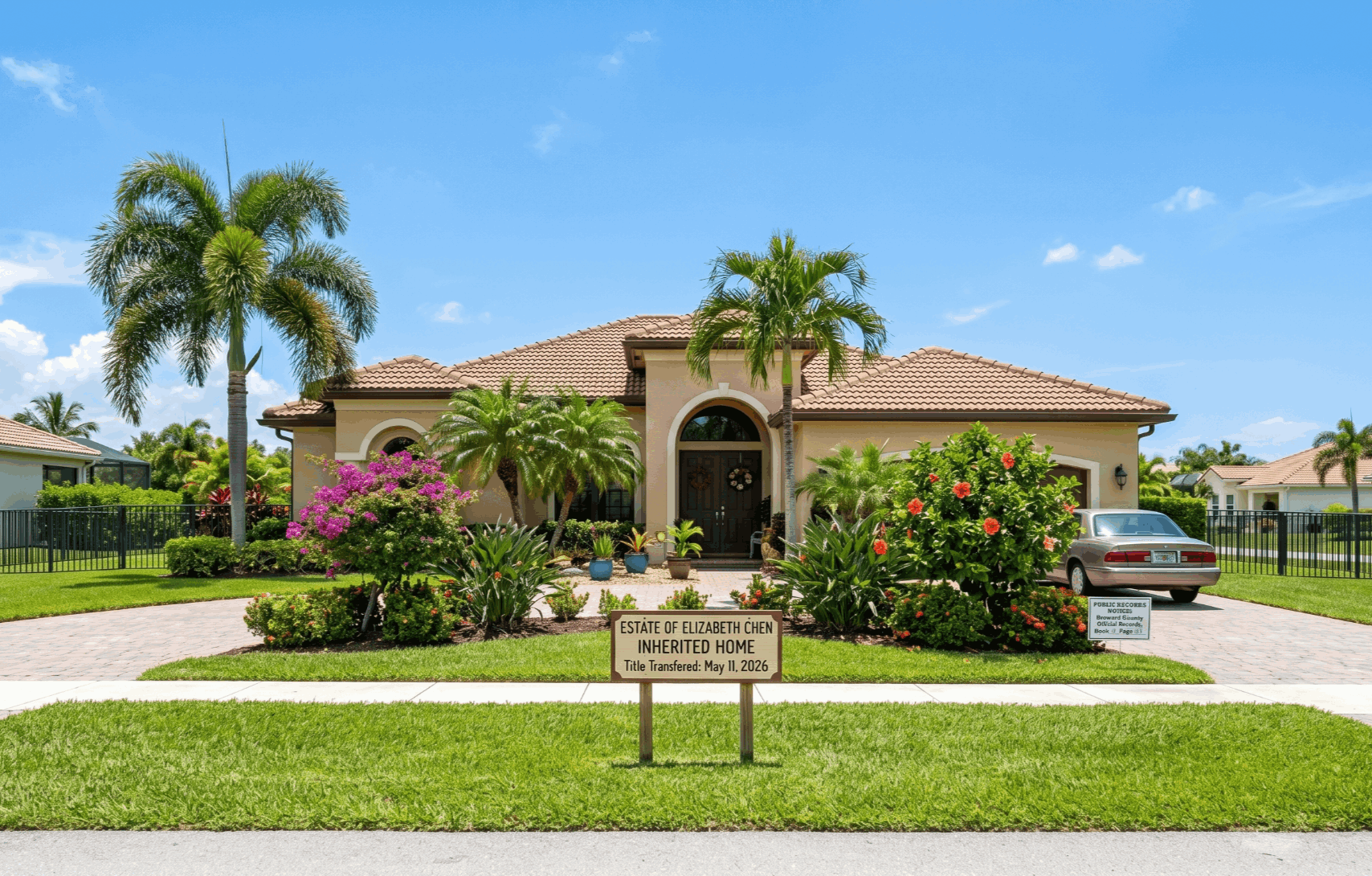
What Do You Do First When You Inherit a House in Broward County?
When you inherit a home in Broward County, the first step is confirming how the property was held because that determines whether you need probate, how long it takes, and who has legal authority to sell. Properties held in a living trust, via a Lady Bird deed, or as joint tenancy with right of survivorship can often transfer outside of court. Everything else typically requires a formal or summary probate proceeding before you can list the home. Until that process is complete, no one has legal authority to sign a listing agreement or accept an offer.
By Mel Carbonell | May 8, 2026
Inheriting a home is one of the more complicated things that can happen to a family and one of the more stressful. You're grieving and dealing with a real estate transaction at the same time. The mortgage keeps getting charged. The taxes accrue. The HOA doesn't pause. And if there are other heirs involved, everyone has to agree before anything moves forward.
Here's a clear picture of what actually needs to happen, what you need to confirm first, and what you'll be dealing with between now and the day you close.
Step 1: Find Out How the Property Was Held
This is the single most important thing to confirm before you do anything else including calling a real estate agent.
In Florida, how a property was titled determines whether you can sell without going to court, and if you do need probate, which type of probate applies.
Probate is NOT required if the property was held one of these ways:
- A revocable living trust the trustee named in the trust document has authority to sell immediately
- A Lady Bird deed (also called an enhanced life estate deed) — the named beneficiary takes title automatically at death, no court involvement needed
- Joint tenancy with right of survivorship the surviving co-owner takes full title automatically
- Tenancy by the entirety (married couples) the surviving spouse gets the property outright
If you're not sure which applies, pull the recorded deed from the Broward County Property Appraiser's office. It shows exactly how title was held and that tells you what process you're in.
If none of the above apply, you're looking at probate. That means a court process before anyone has legal authority to list the home.
Step 2: Understand Florida's Probate Options
Florida has two tracks:
Formal administration is the standard process. A personal representative usually named in the will is appointed by the court, receives letters of administration, and is then authorized to act on behalf of the estate, including signing contracts and accepting offers. In Broward County, formal administration typically takes 6 to 9 months from the initial petition to the court's final order.
Summary administration is available for smaller estates those with non-exempt assets under $75,000, or when the deceased has been gone for more than two years. If you qualify, this can move through in 1 to 3 months.
Neither is immediate. But that doesn't mean the property has to sit completely idle you can begin cleaning out, preparing, and getting the home market-ready while the process moves forward. You just can't execute a contract until the personal representative has been officially appointed.
One important detail: if the property was the deceased's primary homestead, Florida law has specific heir consent requirements. In most cases, all heirs must agree before the property can be sold. If heirs can't reach agreement, any co-owner can file a partition action in Florida court a proceeding that runs $5,000–$15,000 in legal fees and can take another 6 to 12 months.
Family disagreements happen. If there's friction among siblings or other heirs, address it early. The carrying costs of delay mortgage payments, property taxes, insurance, utilities, HOA dues — add up fast. On a typical Broward County home, those costs can run $2,500 to $5,000 per month depending on what's owed.
Step 3: Get the Mortgage Payoff and Understand the Financials
If the deceased had a mortgage, the loan doesn't disappear it becomes an obligation of the estate.
Get a formal payoff statement from the lender. This tells you exactly what's owed and gives you a realistic number to plan from. If the loan is underwater, that changes your options significantly and requires a different conversation.
Most Broward County heirs are surprised to find meaningful equity in the home especially when the property was owned for 10, 20, or 30 years. The net proceeds from the sale go to the estate, then distribute to the heirs according to the will (or Florida intestacy law if there's no will).
If you want to understand what you're actually working with financially before you list, a seller net sheet can lay it all out. This post walks through every line of what Broward County sellers net after closing costs, commissions, and taxes.
Step 4: Know Your Disclosure Obligations
Selling an inherited property as-is is common and legally fine in Florida. But "as-is" does not mean you can skip disclosures.
Florida requires sellers to disclose all known facts that materially affect the value of the property. If you know about roof issues, prior water damage, unpermitted additions, active code violations, or HOA problems you must disclose them, regardless of whether you're selling as-is or whether you inherited rather than purchased the home.
"I inherited it and never lived there" is not a legal shield. What you genuinely know must be disclosed. What you don't know, you aren't required to invent. But a pre-listing inspection can surface issues you may not be aware of and lets you make informed decisions about pricing, credits, or repairs before a buyer's inspector does it for you.
Step 5: Plan for the Broward-Specific Complications
A few things Broward heirs consistently underestimate:
HOA and condo communities. Much of Broward County's housing stock is in HOA or condo communities. Associations have their own requirements access codes, parking procedures, cleanout policies, and management notifications. Get the estoppel letter from the HOA or condo association early. It's required at closing and confirms what's owed plus any outstanding violations. If there are violations, they have to be resolved and that takes time.
Insurance lapses. Homeowner's insurance doesn't automatically transfer at death. If coverage has lapsed, getting a new policy on an unoccupied inherited property can be difficult standard carriers often won't write vacant home insurance, and Citizens Property Insurance has its own rules. Address this as soon as you have authority over the property.
Deferred maintenance. Long-time homeowners often have older roofs, aging electrical panels, and original HVAC systems. In Broward's current market where buyers are more selective and homes are averaging over 90 days to sell pricing this accurately matters. You'll need a strategy built around what the home actually is, not what you hope it will appraise at.
What the Actual Sale Process Looks Like
Once the personal representative has legal authority, the sale process looks much like a standard transaction:
Hire a listing agent. Get a comparative market analysis. Price the home strategically. List, negotiate offers, open escrow, complete the inspection and appraisal period, close.
The main difference is that the personal representative signs all documents on behalf of the estate not as a personal property owner. Closing proceeds go to the estate and then distribute to the heirs per the will or court order.
If you're planning to use those proceeds to buy in Port Saint Lucie or elsewhere in Florida, and the inherited home carried a homestead exemption, you'll also want to understand portability whether and how the deceased's Save Our Homes tax savings can affect your own purchase. This post on Florida homestead portability explains what Broward County sellers moving to the Treasure Coast need to know.
Frequently Asked Questions
Do you need probate to sell an inherited home in Florida?
Not always. Properties held in a living trust, via a Lady Bird deed, in joint tenancy with right of survivorship, or in tenancy by the entirety (with a surviving spouse) can transfer title without going to court. If the home was held solely in the deceased's name with none of those mechanisms in place, Florida probate is required before any heir has authority to sell. A Florida probate attorney can confirm which path applies to your specific situation.
How long does probate take in Broward County, Florida?
Formal probate in Broward County typically takes 6 to 9 months from the initial petition. Summary administration available for estates with less than $75,000 in non-exempt assets, or when the deceased has been gone for more than two years can resolve in 1 to 3 months. You can prepare the property for sale during probate, but a contract cannot be executed until the personal representative is officially appointed by the court.
Do all heirs have to agree to sell an inherited property in Florida?
Generally, yes especially for homestead property. All co-owners must agree to a sale. If heirs cannot agree, any co-owner can file a partition action under Florida law, which can ultimately force a sale. The process is expensive ($5,000–$15,000+ in legal fees) and time-consuming (6–12 additional months), which is why working toward agreement early is almost always in everyone's financial interest.
Is there estate tax or capital gains tax when selling an inherited home in Florida?
Florida has no state estate tax or inheritance tax. The federal estate tax only applies to estates over approximately $15 million per person (as of 2026). For capital gains, inherited property receives a stepped-up basis your taxable gain is calculated from the fair market value at the date of inheritance, not the original purchase price. This significantly reduces capital gains exposure for most heirs. Consult a tax professional for guidance specific to your situation.
Can you sell an inherited home as-is in Florida?
Yes, but as-is does not eliminate your disclosure obligations. Florida sellers must disclose all known material defects regardless of sale terms. Known roof issues, water damage, unpermitted work, code violations, and HOA problems must be disclosed even on an as-is, inherited sale. A pre-listing inspection can help you understand what you're dealing with and give you the information you need to price and negotiate intelligently.
Inheriting a home in Broward County involves real decisions that need to happen in the right order long before you ever list the property. Getting clear on how title was held, what the probate process requires, what carrying costs are accumulating, and what your disclosure obligations are puts you in the best position to sell cleanly and move forward.
If you've inherited a property and you're not sure where to start, book a free discovery call with me here. We'll figure out where you are in the process, what's needed next, and what a realistic timeline looks like so you can make a confident plan instead of guessing.
About Mel Carbonell
Melissa Carbonell is a South Florida real estate professional specializing in helping long-time homeowners, empty nesters, and retirees sell the family home and confidently step into their next chapter whether that's downsizing, relocating to the Treasure Coast, or starting fresh somewhere new.
Categories
Recent Posts