What Broward County Home Sellers Must Disclose (And What Happens If You Don't)
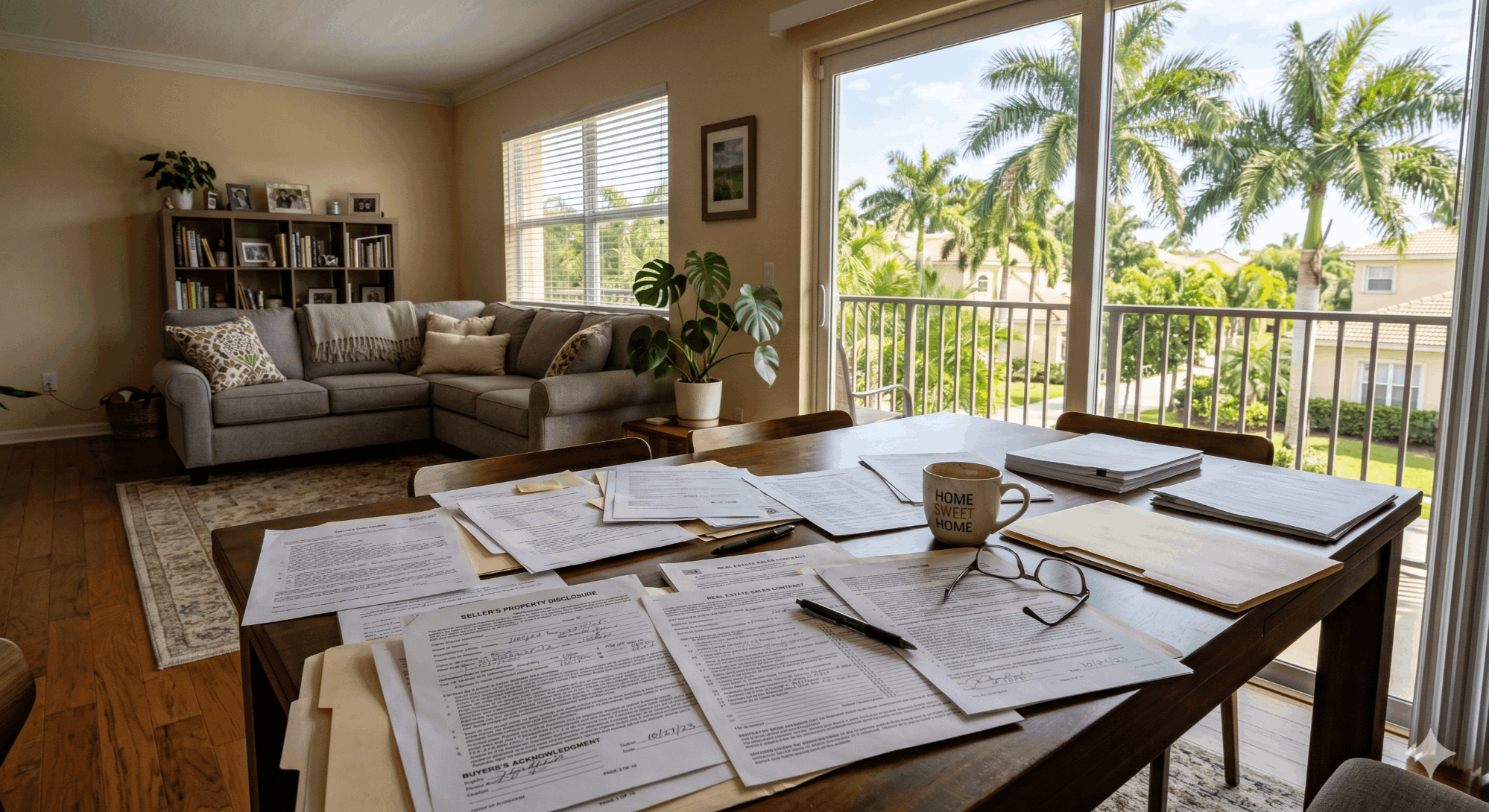
What Are Florida Home Sellers Required to Disclose When Selling?
Florida home sellers are legally required to disclose all known facts that materially affect the value of the property and are not readily observable by the buyer. This includes roof issues, prior water damage, unpermitted work, mold, active code violations, HOA violations, flood zone status, and insurance claims history. Florida updated its disclosure contract language in January 2026, and a new flood disclosure law took effect October 2025. Selling 'as-is' does not eliminate these obligations — it only means the buyer accepts the property's condition and cannot demand repairs. Sellers who fail to disclose known defects can face lawsuits for misrepresentation even after closing.
By Mel Carbonell | May 8, 2026
The disclosure conversation is the one most sellers want to skip - and the one that causes the most legal problems when they do. Whether you're selling a long-held family home, an inherited property, or a condo you've rented out for years, Florida's disclosure rules apply to you.
The Core Legal Standard
Florida follows the Johnson v. Davis standard: sellers must disclose any fact that materially affects the value of the property and that the buyer cannot easily discover through ordinary observation. This is broader than a checklist - it's a knowledge-based obligation. The key phrase is what you know. If you've had a leak, a repair, an insurance claim, or an HOA violation - that knowledge triggers a disclosure obligation.
What the Florida Seller's Property Disclosure Form Covers
Roof: Age, known leaks or repairs, insurance claims filed, and whether/when it was replaced.
Water and moisture: Any known water intrusion, flooding, or moisture damage; history of mold or mold remediation; flood zone status (as of October 2025: whether flood insurance is required or has ever been filed).
Structural and systems: Foundation, HVAC, water heater, electrical panel age and condition; any unpermitted work or additions; open permits or code violations.
HOA: Whether in an HOA or condo association; pending special assessments; violations on account; fees and anticipated increases.
Environmental: Lead-based paint (pre-1978 homes, required separately); asbestos, radon, private well or septic.
Insurance history: Claims filed in the past five years; any coverage denied or not renewed.
What Changed in 2025 and 2026
October 2025 - Flood Disclosure: Florida now requires sellers to disclose whether the property is in a FEMA flood zone, whether flood insurance is in place, whether it was ever required by a lender, and whether the property has experienced flooding.
January 2026 - Updated Contract Language: Florida Realtors® updated standard contract and disclosure forms with revised language around property condition, buyer due diligence periods, and representation. Confirm you're using current forms.
Common Disclosure Mistakes Broward Sellers Make
"I sold it as-is, so I didn't have to disclose anything." - This is the most legally dangerous misconception. Selling as-is means the buyer accepts condition and can't demand repairs. It has zero effect on disclosure obligations. Florida courts have consistently held that as-is language does not protect sellers from non-disclosure liability.
"It was fixed, so it doesn't need to be disclosed." - Prior issues that were remediated must still be disclosed. Buyers have a right to know the property's history, not just its current condition.
"I inherited it and never lived there." - What you know must be disclosed. What you genuinely don't know, you aren't required to invent. But documented knowledge - invoices, insurance claims, HOA notices - is knowledge.
What Happens If You Don't Disclose
A buyer who discovers a material defect after closing that you knew about can sue for: rescission of the sale, compensatory damages equal to repair cost, and fraud damages in cases of intentional concealment. Florida's statute of limitations for fraud claims is four years. Disclosure failures don't disappear after closing.
How to Protect Yourself
Get a pre-listing inspection - it gives you documented professional knowledge of your property's condition and eliminates gray areas. For Broward County sellers with older homes, a pre-listing inspection paired with a 4-point inspection is worth the cost.
Fill out the disclosure form carefully. If you're not sure whether something needs to be disclosed, the answer is almost always: disclose it. A disclosed issue that buyers accept is far safer than an undisclosed issue that surfaces after closing.
Work with an agent who walks you through the form - not just hands it to you. For the full selling picture: melcarbonell.com/blog/broward-seller-net-proceeds-closing-costs
Frequently Asked Questions
What must a seller disclose in Florida?
Florida sellers must disclose all known facts that materially affect the value of the property and are not readily observable to the buyer. This includes roof issues, water damage history, mold, unpermitted work, code violations, HOA violations and pending assessments, flood zone status, insurance claim history, and any structural or system defects the seller is aware of.
Does selling a house as-is in Florida avoid disclosure requirements?
No. Selling as-is means the buyer accepts the property's condition and cannot request repairs. It does not reduce the seller's obligation to disclose known material defects. Florida courts have consistently upheld that as-is clauses do not protect sellers from liability for non-disclosure.
What is the new Florida flood disclosure law?
As of October 2025, Florida sellers must disclose whether the property is in a FEMA-designated flood zone, whether flood insurance is currently in place or was ever required by a lender, and whether the property has experienced flooding or flood damage. This applies to all residential sales statewide.
Do I need to disclose repairs that were already fixed?
Yes. In Florida, prior issues that have been remediated - roof leaks, water damage, mold treatment, plumbing repairs - must still be disclosed. Buyers have a right to know the property's history, not just its current condition.
What happens if a seller fails to disclose in Florida?
A buyer who discovers an undisclosed material defect after closing can sue for rescission of the sale, compensatory damages equal to the repair cost, or fraud damages in cases of intentional concealment. Florida's statute of limitations for fraud claims is four years.
Florida's disclosure rules create a fair transaction where buyers know what they're buying. Sellers who disclose thoroughly and price accordingly consistently have smoother closings, fewer post-contract surprises, and no legal exposure after the fact.
If you're getting ready to sell in Broward County and want to walk through the disclosure form together before you list, book a free discovery call at: Calendar
About Mel Carbonell
Melissa Carbonell is a South Florida real estate professional specializing in helping long-time homeowners, empty nesters, and retirees sell the family home and confidently step into their next chapter - whether that's downsizing, relocating to the Treasure Coast, or starting fresh somewhere new.
Categories
Recent Posts